

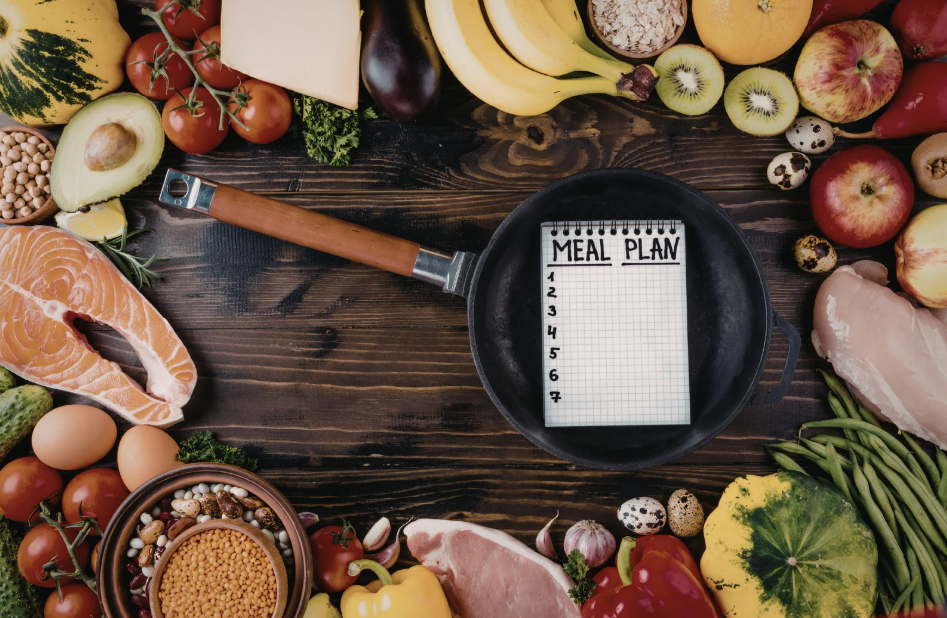
I was 52 when I finally admitted something I never expected: meal planning stressed me out more than it ever helped me. For years I chased the “perfect” system—color-coded charts, Pinterest boards full of pretty recipes, and a quiet guilt that hummed in the background whenever dinner didn’t look picture-ready.
But entering midlife changed everything. My body wasn’t responding to food the way it used to. What I ate suddenly affected my sleep, my joints, my energy, even my mood. And the old approach of try harder, get stricter only left me feeling defeated and disconnected from the peace God wanted for me.
That’s when the Lord gently nudged me toward something different—what I now call faith based meal planning. Not attaching verses to a diet you secretly resent, but slowing down long enough to ask God to guide your appetite, your choices, and your expectations. It became less about rigid control and more about relationship.
And honestly? The calm surprised me. When I began planning around my actual life—my energy, my schedule, my season—everything softened. The pressure eased. I could breathe again and say, “Okay Lord, show me what nourishes me today.”
If you’re a Christian woman over 45 longing for simple, peaceful eating—not the hustle of diet culture—these seven ideas were written with you in mind. They blend Scripture, midlife wisdom, and gentle practicality.
What I wish I’d known at 45 is this: meal planning isn’t another chore to conquer. It’s an invitation to receive God’s provision and honor the beautiful body He entrusted to you.
What Scripture Reveals About Nourishment & Peace
One of the breakthroughs that shifted everything for me was realizing the Bible says far more about nourishment than we think. Not calories. Not diets. Not trends. Nourishment.
From Genesis to Revelation, God frames food as provision, blessing, fellowship, remembrance, strength, celebration, and restoration. Never once does He use it as a measurement of a woman’s worth.
Here are the truths that began to reshape my meal planning:
1. God cares about how we’re fed—spiritually and physically.
“Give us this day our daily bread.” (Matthew 6:11)
Daily bread reminds us that nourishment is continuous. Ongoing. Something God offers regularly, not something we must earn or over-engineer.
2. The Lord invites us to eat with peace, not anxiety.
“Do not worry about what you will eat…” (Matthew 6:25)
Not worrying doesn’t mean ignoring our health—it means refusing to let fear drive our choices.
3. Our bodies are sacred vessels, not projects.
“…your body is the temple of the Holy Spirit…” (1 Corinthians 6:19)
Temple care is loving, consistent, and holy—not perfectionistic.
4. God uses food as a symbol of His presence.
From Jesus breaking bread with His disciples to the early church sharing meals daily, food was never meant to be a source of shame. It was meant to connect us—to God and to each other.
When I began inviting God into my meal planning, the pressure eased. I stopped asking, “What should I eat to fix myself?” and began asking, “Lord, how can I honor You and care for the body You crafted?” That shift changed everything.
I started praying before I planned—something simple like:
“God, guide my choices this week.
Show me what foods bring peace, energy, and joy.
Help me release guilt and receive Your provision with gratitude.”
Then I paid attention to what brought me calm instead of chaos.
Light meals instead of heavy ones.
Warm foods on days I felt drained.
Simple recipes instead of complicated ones.
Proteins that actually kept me full.
Greens that refreshed instead of overwhelmed.
Small portions when my appetite was low; fuller meals when my body needed more.
Scripture didn’t give me a meal plan—it gave me permission to slow down, listen, and trust God with my body’s changing needs.
“Whether you eat or drink… do all to the glory of God.” (1 Corinthians 10:31)
Not with stress.
Not with shame.
Not with pressure.
But with presence.
That’s what faith based meal planning is at its core: an invitation to live nourished, not burdened. To eat with peace instead of panic. To receive God’s daily bread—literally and spiritually—with open hands.
The Gentle Approach That Changed My Life
It took me years of trial and error to realize meal planning doesn’t have to be rigid to work. In fact, the stricter I was, the faster I burned out. What finally changed everything was embracing gentleness—not just in what I ate, but in how I approached the whole process.
What I wish I’d known at 45 is that gentle consistency beats intense perfection every time, especially in midlife.
I didn’t overhaul anything. I didn’t start a new program or empty my pantry. I simply asked, “What would make eating feel peaceful this week?” The answers were small and practical: fewer recipes, more leftovers, one slow-cooker meal, foods that didn’t inflame my joints, and a grocery list that didn’t overwhelm me. A rhythm instead of a rulebook.
And then came the part that surprised me most—inviting God into the process. Not dramatically, just quietly. I’d play soft worship music, open my planner, and pray:
“Lord, help me choose meals that bring peace.
Help me release expectations You never asked me to carry.”
He met me there—in the tiny choices, the simple meals, the honest moments of low energy. Some weeks He nudged me toward nourishing foods; other weeks He nudged me toward ease.
Meal planning slowly shifted from a chore into a small act of worship… a way to steward the body He entrusted to me.
And I learned something beautiful:
Gentle planning honors God far more than punishing discipline.
Listening to your body is wisdom, not weakness.
Adjusting your meals to match your season is obedience, not failure.
When I stopped trying to do it “right,” I finally started doing it consistently—and that consistency is what truly transformed my midlife health.
The Science Behind Midlife Nutrition
I’m not here to give you a biology lecture, but understanding just a little science helped me stop blaming myself for changes I couldn’t control.
Here’s what’s happening after 45:
1. Hormones shift dramatically
Estrogen and progesterone decline, which affects everything from metabolism to appetite to blood sugar regulation.
Result?
You might feel hungrier some days, less hungry others, and more sensitive to certain foods.
2. Muscle mass naturally decreases
This means your metabolism slows unless you intentionally add protein and gentle strength training.
3. Digestion changes
Foods you tolerated easily at 30 may now cause bloating or discomfort.
4. Stress affects weight more than ever
Cortisol changes how your body stores fat—especially around the midsection.
5. Blood sugar becomes more sensitive
Steady meals matter more. Skipping meals often leads to overeating later.
This isn’t failure—it’s chemistry.
And it’s why faith based meal planning works so well for this season: it respects your biology AND your spiritual well-being.
You don’t need perfection.
You just need rhythms.
Rhythms God can bless.
7 Faith Based Meal Planning Ideas for Simple, Peaceful Eating
What I discovered in my fifties is that meal planning doesn’t have to feel like running a marathon with grocery bags. It can be slow. It can be sacred. It can actually bring peace into your week instead of pressure. These seven faith based meal planning ideas grew slowly in my life—through trial and error, through emotional breakdowns in the cereal aisle, and through those quiet moments when the Lord whispered, “There’s an easier way.”
Below is the deeper, fuller version of each idea, written with the rhythms of midlife and the heart of faith at the center.
1. Begin with a “Peace Check” Instead of a Meal Plan
This is the step I never learned in my younger years. Back then, I planned meals based on what looked pretty on Instagram or what some influencer said was “healthy.” But at 52, I began noticing that the real question wasn’t “What should I cook?” but “What kind of week am I actually living?”
A peace check is simple but surprisingly spiritual. It’s pausing before the planning and asking:
“Lord, where is my heart this week?
Where is my energy?
Where is my capacity?”
If your week includes appointments, caregiving, grandkids visiting, work deadlines, or hormonal fatigue that feels like someone unplugged your battery—your meals should reflect that. This includes choosing slower recipes on slower weeks and easier foods on heavier weeks. It’s planning with your season instead of fighting against it.
What I didn’t know at 45 is that God cares about the emotional weight of our calendar just as much as the meals on our table.
Sometimes peaceful eating begins with simply admitting, “This is not a week for complicated meals.” That honesty alone can make you breathe deeper.
2. Choose a Weekly Anchor Meal
This idea came to me during a season when decision fatigue felt like it was swallowing me whole. But what steadied me was repeating one meal every week—no shame, no guilt, no apologies.
For me, it became “Sunday Soup.” For you it might be “Monday salad bowls,” “Thursday crockpot chicken,” or “Friday veggie omelets.” Once that anchor meal is set, the rest of the week feels lighter because one decision is already made.
There’s a quiet spiritual lesson here too: God often anchors us with rhythms—not rules. Sabbath is a rhythm. Morning prayer is a rhythm. The seasons themselves are rhythms. Adding one mealtime rhythm teaches your mind to relax and teaches your body what to expect.
And honestly, midlife bodies love predictability. The anchor meal becomes like a sigh of relief built right into your week.
3. Use the “Faith + Fuel” Plate
This is a simple, gentle visual I wish I had discovered sooner. Instead of obsessing over macros or weighing food, I picture my plate divided into three parts:
• A protein that fuels my muscles
• A fruit or vegetable that reminds me of God’s creation
• A starch or whole grain that brings steady energy
It’s not a rule—just a gentle guide. And what I love most is how it ties my eating back to worship. When I build my plate this way, I often whisper:
“Lord, thank You for the food that strengthens the body You lovingly designed.”
There’s something humbling about remembering God chose to make our bodies require nourishment. He could have made us solar-powered. But He didn’t. He chose meals, taste, color, texture, community. He chose nourishment as a daily reminder that we are dependent on Him.
That truth alone softened so much of my old “food guilt.” Food became sacred again—not stressful.
4. Plan for “Grace Nights” on Purpose
What changed everything for me was realizing that the nights I felt guilty for not cooking were never failures—they were signs of a life being lived.
Once I started planning for 1–2 “grace nights” each week, the guilt dissolved. These nights might mean eggs and toast, sandwiches, a simple salad kit, or even leftovers warmed up with gratitude.
Some weeks, grace nights were my survival. Other weeks, they were simply a chance to rest. But either way, planning them ahead of time made them feel purposeful instead of shameful.
As women over 45, our bodies don’t just need nourishment—they need margin. They need evenings that aren’t filled with chopping, sautéing, or scrubbing pots. Grace nights offer that. They remind us God never asked us to be machines. He asked us to abide.
5. Invite Scripture Into the Kitchen
This practice still brings tears to my eyes because it quietly transformed the atmosphere of my entire home.
Years ago, I taped a verse inside the cabinet where I keep my spices. Every time I opened it—rushing, tired, or overwhelmed—I’d see those words before I saw the paprika:
“The Lord is my shepherd… I lack nothing.” (Psalm 23:1)
Nothing. Not wisdom. Not strength. Not time. Not provision.
You can choose any verse that steadies you:
• Proverbs 31:25 when you need courage
• Matthew 6:34 when you’re worried
• Philippians 4:13 when you’re exhausted
It’s amazing how a single truth on a small sticky note can shift your heart while you chop vegetables.
Your kitchen becomes a sanctuary, not a battleground.
6. Prep Only What Actually Helps You
I spent years believing I had to prep a week’s worth of meals to be “healthy.” But eventually I realized that “full prep” stressed me out more than it served me. What actually helped was what I now call micro-prep—tiny steps that make meals easier but don’t require hours in the kitchen.
Washing fruit.
Chopping greens.
Cooking one protein for the week.
Roasting vegetables while doing a devotional.
Making a simple soup that lasts two days.
These tiny preparations make a huge difference, especially on days when your energy is unpredictable—which, let’s be honest, is half of midlife.
Micro-prep is sustainable because it respects your energy rather than draining it.
7. Bless Your Meals Before the Week Begins
This is the part almost no one talks about, but it’s become one of the most meaningful rhythms in my spiritual life. Once my simple plan is complete, I breathe deeply and pray:
“Lord, bless these meals.
Let them nourish my body, quiet my emotions,
and draw me closer to You each day.
Fill my kitchen with peace. Amen.”
There’s something profoundly grounding about asking God to bless not just the food, but the week ahead. It reframes meal planning from a chore into an act of surrender.
And every single time I pray that blessing, I feel the pressure lift. I remember that I’m not navigating midlife alone. The God who fed Elijah, Israel in the desert, and the crowds gathered around Jesus is the same God who cares about your grocery list.
Faith based meal planning isn’t about being perfect.
It’s about being present—with God, with your body, and with the life He’s shaping in this season.
Overcoming the Food Guilt That Steals Our Joy
If I’m honest, I spent far too many years believing food guilt was something I “deserved.” I thought that if I made the wrong choice, ate late, or grabbed something quick because I was tired, I had somehow failed. But what I’ve learned in my fifties is this: food guilt steals far more from us than any meal ever could.
Most guilt doesn’t come from overeating — it comes from believing we must earn our worth through perfect habits. And as our bodies shift after 45, the pressure often intensifies. The meals that once worked don’t work anymore. Our energy changes. Our appetite changes. Life changes. Yet guilt whispers, “You should be doing better.”
But that is not the Lord’s voice.
Scripture tells us, “Where the Spirit of the Lord is, there is freedom” (2 Corinthians 3:17). Freedom from fear around food. Freedom from the shame of “messing up.” Freedom from thinking our value is tied to perfect choices.
What helped me break the cycle was simply telling the truth:
“I’m not failing — I’m tired.”
“I’m not weak — I’m overwhelmed.”
“I’m not out of control — I’m human.”
That honesty softened me. It helped me see I didn’t need punishment; I needed compassion. And compassion actually leads to better choices than guilt ever could.
Another shift came when I realized comfort eating isn’t sinful in itself. God designed food to soothe and restore us. The problem isn’t using food for comfort — it’s using it alone, without also turning to the deeper comfort God offers.
Faith based meal planning frees us because it replaces pressure with peace. It teaches us to slow down, listen, pray, and choose nourishment without shame attached to it.
My simple prayer now is:
“Lord, teach me to eat with grace, not guilt.”
And He has.
He will for you too.
You are not behind.
You’re not failing.
You’re learning new rhythms in a new season — and God is leading you gently every step of the way.
CONCLUSION
If this season of life has taught me anything, it’s that God isn’t asking us to perfect meal planning — He’s inviting us to approach it with peace. Faith based meal planning is less about getting every choice right and more about trusting the One who knows exactly what your body needs in this stage of life.
When we release guilt, simplify our routines, and invite God into the kitchen, something shifts. Eating becomes calmer. Decisions feel lighter. And we start caring for our bodies with the same gentleness God extends to us.
At 45, I believed the answer was stricter rules. At 52, I realized the answer was grace. Simple meals. Simple rhythms. A simple prayer:
“Lord, help me nourish the body You lovingly designed.”
As you step into the week ahead, remember: your worth isn’t measured by your dinner choices. You are a beloved daughter, walking out a new rhythm of nourishment with God’s steady hand guiding you.May your meals be simple.
May your heart be peaceful.
And may you feel God’s presence in every bite, every plan, and every gentle step toward caring for the body He entrusted to you.