Encouragement
You Don't Need to Make Fitness Your Whole Life
By Connie Grevengoed · September 14, 2026 · 8 min read
I once built my entire life around training. I don't anymore, and I'm healthier for it. Here is what enough actually looks like.
There was a season when fitness was my whole life. I taught classes, I trained clients, I competed. My schedule, my meals, my vacations, my social life, all of it organized around the next workout.
I learned a lot in those years and I don't regret them. But I wouldn't go back, and I wouldn't recommend that life to any woman I care about.
Because here's what I know now that I didn't know then. Fitness is supposed to serve your life. When it starts running your life, something has gotten turned around.
The all-or-nothing trap
Most women I talk with aren't overdoing it. They're stuck in the other ditch, and it's usually the same one.
They decide to get serious. They plan six workouts a week. They last eleven days. Then a grandchild gets sick or a work project blows up or they just get tired, they miss three days, and the whole thing quietly dies. Then they feel bad about themselves for a few months until the next January.
I've watched that cycle for thirty years. The problem was never willpower. The problem is that the plan was too big to survive a normal week.
Real life has funerals, and houseguests, and bad backs, and Tuesdays where everything goes sideways. A plan that only works on perfect weeks isn't a plan.
What enough actually looks like
Here's what I'd call a solid week for most women our age. It's less than you think.
- Two strength sessions, twenty to thirty minutes each
- A walk most days, even a short one
- A few minutes of mobility or stretching when your body asks for it
- Enough sleep to wake up reasonably human
- Protein at your meals, water through the day
That's it. That's the whole thing. Four or five hours a week, total, and a good portion of it is walking you'd be doing anyway.
You could do more. Some weeks you will. But that list, done steadily for a year, will put you in better shape than any six-week program you abandon in week two.
Short counts
I'll say this plainly because a lot of people won't. A fifteen-minute strength session is not a waste of time. Neither is ten minutes of walking.
The body responds to what you actually do, not to what you intended to do. A short session you finish beats a long one you skip, every single time. It isn't a compromise. It's just arithmetic.
I keep short sessions in the [workouts](/workouts) library for exactly this reason. Not because short is the point of HolyFit45 — it isn't — but because short is often the difference between doing something and doing nothing.
Walking counts too
Somewhere along the way we decided that if you weren't sweating and straining, it didn't count. That's nonsense and it keeps a lot of women home.
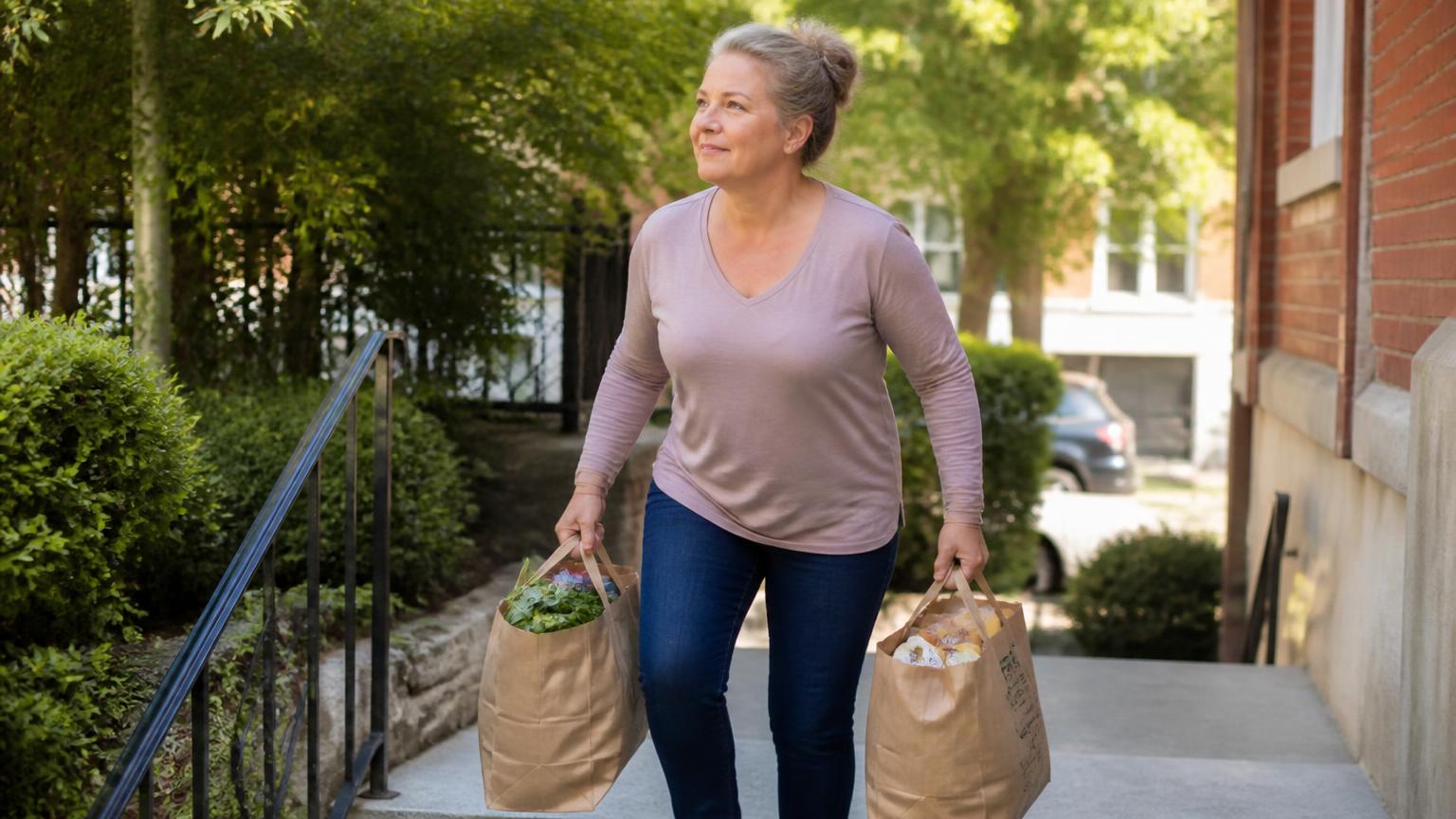
A twenty minute walk is real exercise. It's good for your heart, your blood sugar, your mood, your joints, and your head. It's also free, requires no equipment, and you can do it with a friend or a phone call or nobody at all. Indoors on a treadmill, around the block, through the grocery store parking lot the long way. It all counts. There's more in [walking](/walking) if you want a bit of structure.
Rest is part of the plan
Rest days are not days off from your goals. They're when the work you did becomes strength.
This was the hardest lesson for me. In my competing years, rest felt like losing ground. Now I understand that the body adapts during recovery, not during effort, and that pushing a tired body is how you end up injured and sitting on the couch for six weeks.
If you're worn down, take the day. Stretch, breathe, go to bed early. Our [Restore](/restore) practices exist for exactly those days, and using them isn't quitting.
Seasons change, and that's allowed
Some seasons you'll train well. Some seasons you're caring for a parent, or recovering from surgery, or moving, or grieving, and the honest goal is just to keep moving a little and not lose everything.
Both are legitimate. The woman doing two short sessions a week during a hard year is not failing. She's maintaining, and maintaining is an accomplishment that nobody hands out ribbons for.
The only real failure is deciding that since you can't do it perfectly, you won't do it at all.
How to build something that survives a bad week
- Pick a floor, not a ceiling. Decide the smallest amount you'll do no matter what. Mine is one strength session and a few walks. On good weeks I do more. On bad weeks I still hit the floor.
- Attach it to something. Strength on Tuesday and Friday mornings. Walk after supper. Decisions made in advance don't need willpower.
- Miss without drama. Missed Tuesday? Tuesday's gone. Do Wednesday. No restarting, no penance.
- Let it be boring. The same five movements for months is not a lack of imagination. It's how people get strong.
- Notice what it gives you. Better sleep, easier stairs, steadier mood. Those keep you going longer than any goal weight ever will.
What you're actually after
I want you strong enough to live your life. I don't want fitness to become your life. There's a difference, and honestly, the women who get it right are usually the ones with too many other good things going on to obsess over a workout.
Your calendar should have friends in it, and church, and work you care about, and books and travel and grandchildren and a garden. Your workout should be a supporting character in that story. A faithful one. But a supporting character.
Inside HolyFit45, [Today](/today) is built on that idea. One simple thing to move, something to feed your faith, and a way to look out for someone else. Not a program to conquer. A rhythm to live with.
That's what I've landed on after all these years. Take care of yourself well enough to go do the things that actually matter. Then go do them.
HolyFit45 offers general wellness encouragement and is not medical advice. Please speak with your doctor about your personal health.