Healthy Aging
Is Walking Enough After 45? Why Strength Training Matters Too
By Connie Grevengoed · October 26, 2026 · 12 min read
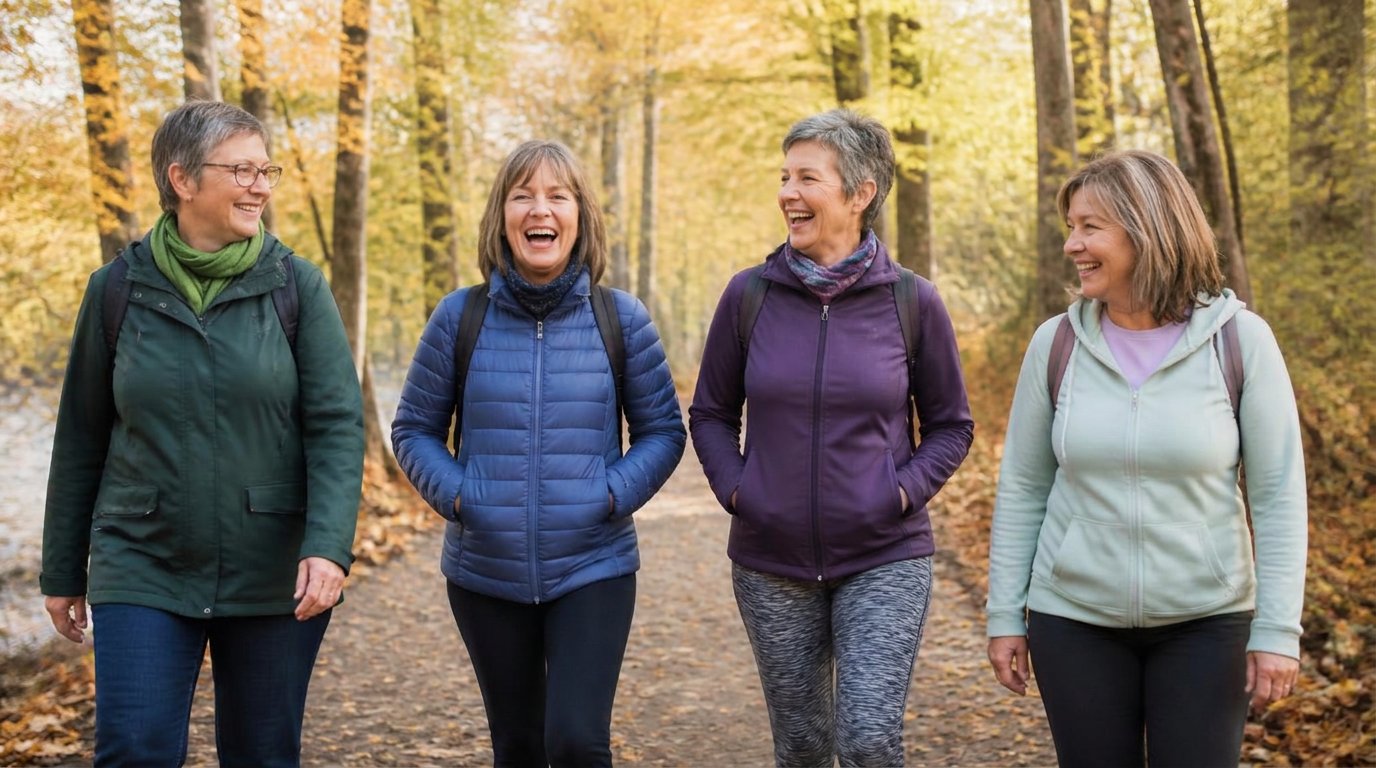
Walking is one of the best habits you can keep after 45 — but it does not fully replace strength training. Here is the simple mix that supports muscle, balance, and everyday independence.
If walking is the one form of exercise you actually enjoy and stick with, I am not going to tell you to stop. Walking is one of the best habits you can keep as you get older. It gets you outside, supports your heart, clears your head, and fits into real life.
But there is a question more women are asking now: Is walking enough after 45?
For overall health, walking is an excellent foundation. But walking by itself does not fully replace strength training. As we move through midlife and beyond, keeping our muscles strong becomes increasingly important for things like getting out of a chair, carrying groceries, climbing stairs, staying steady, traveling, gardening, and getting down on the floor and back up again.
The good news is that you do not need to turn into a gym person. A couple of short strength sessions each week can sit right beside the walking you already enjoy.
Quick answer: Is walking enough after 45?
Walking is excellent aerobic activity, but most women also benefit from adding muscle-strengthening exercise at least twice a week. Current U.S. physical activity guidance recommends both aerobic activity and strength work because they do different jobs. Walking supports cardiovascular fitness and endurance; resistance exercise helps maintain strength and muscle needed for everyday function.
What does walking do really well?
Walking deserves its good reputation.
A brisk walk can count toward the aerobic activity recommended for adults. It is accessible, inexpensive, and easy to scale up or down depending on the day. Regular walking can support cardiovascular health, endurance, mood, and the ability to stay active.
And for many women, walking is realistic in a way that complicated workout plans are not.
That matters. The best exercise plan is not the one that looks impressive on paper. It is the one you can keep returning to.
If walking has become part of your routine, keep it. HolyFit45 is not here to take a good habit away from you.
If you enjoy combining movement and prayer, you may also like Walking With God: How a Daily Walk Can Strengthen Body and Faith.
What does walking not fully train?
Walking does not challenge all of your major muscle groups enough to replace dedicated strength work.
Your legs certainly work when you walk, especially on hills. But ordinary walking generally does not give your chest, back, shoulders, arms, and core the kind of resistance they need to build or maintain strength. It also may not challenge the legs enough once your body is accustomed to your usual route.
That is why current CDC guidance separates aerobic activity from muscle-strengthening activity. Adults are encouraged to do both: at least 150 minutes of moderate-intensity aerobic activity per week and muscle-strengthening activities on at least two days per week.
Think of walking and strength work as partners rather than competitors.
Walking helps you keep going.
Strength helps you keep doing.
Why does strength matter more as we get older?
There is nothing magical about your 45th birthday. You do not suddenly become weak when you reach a certain age.
But midlife is a good time to become more intentional about strength because muscle mass and strength can gradually decline with age, especially when we are inactive. Menopause-related changes can add another reason for women to pay attention to muscle and bone health.
A 2026 systematic review and meta-analysis looked at 126 studies involving 4,019 women. Resistance training improved muscular strength in both premenopausal and postmenopausal women. The authors concluded that resistance training can improve strength across the female lifespan, with individualization being more important than rigid age-based rules.
Even the ACSM's 2026 fitness trends point the same direction: strength training, functional fitness, and programs for older adults are at the top of the list. The conversation has shifted from appearance to function and independence.
That is encouraging because it means it is not too late to begin.
You do not have to train the way you did at 25. You simply need enough resistance to ask your muscles to keep adapting.
What does recent research say about everyday strength?
Some of the most interesting healthy-aging research is focusing less on appearance and more on what people can actually do.
A 2026 study in JAMA Network Open followed more than 5,000 women ages 63 to 99. Researchers measured grip strength and how quickly women could complete five chair stands without using their arms. Greater strength was associated with lower all-cause mortality over roughly eight years of follow-up, even after researchers accounted for physical activity and several other factors.
That study does not prove that a faster chair stand causes a longer life. But it adds to a growing body of evidence that functional strength is an important part of healthy aging.
Another JAMA Network Open study published in August 2026 examined more than 13,000 adults age 65 and older. Better performance in balance and agility, lower-body strength, and cardiorespiratory fitness was associated with lower all-cause mortality.
In other words, healthy aging is not one fitness quality. Walking matters. Strength matters. Balance matters.
That combination is exactly why a simple, well-rounded routine makes more sense than trying to find one perfect exercise.
How much strength training do women over 45 need?
For most adults, a practical starting point is two strength sessions per week that work the major muscle groups.
You do not need hour-long sessions. You do not need a complicated split routine. And you do not necessarily need a gym.
The CDC counts several forms of resistance as muscle-strengthening activity, including:
- Dumbbells or other weights
- Resistance bands
- Bodyweight exercises
- Some yoga postures
- Other activities that make your muscles work against resistance
A useful starting point is one or more sets of about 8–12 repetitions for a movement, using enough resistance that the final repetitions feel challenging while your form stays solid.
For beginners, even 10–15 focused minutes can be a useful place to start.
What are the best strength exercises to add to walking?
You do not need twenty exercises. Start with movements that resemble real life.
1. Sit-to-stand
Sit near the front of a sturdy chair and stand up with control, then sit back down slowly.
This trains the strength you use every time you get out of a chair, car, or low seat.
2. Wall or counter push-up
Use a wall for the easiest version and a counter when you are ready for more challenge.
This works pushing strength through the chest, shoulders, and arms.
3. Supported row
Using a light dumbbell or water bottle, support one hand on a chair or counter and pull the other elbow toward your hip.
Rows strengthen the back and arms used for carrying and pulling.
4. Farmer carry
Hold one or two light weights at your sides and walk slowly with tall posture.
It is wonderfully practical training for groceries, luggage, laundry baskets, and grip strength.
5. Supported step-back or mini squat
Hold a sturdy chair and practice a small controlled step-back or squat.
This trains the legs and hips while also asking you to stay steady.
6. Calf raise
Hold a chair, rise onto the balls of your feet, and lower slowly.
Strong calves help with walking, stairs, and balance.
HolyFit45 members can follow the complete Strong for Everyday Life: 15-Minute Functional Strength After 45 session, with easier options for every movement.
Do I need to lift heavy weights after 45?
No. You need resistance that is appropriately challenging for you.
There is a lot of current conversation about women in midlife lifting heavier weights. Progressive resistance is important if your goal is to continue getting stronger. But "heavier" is relative.
For one woman, progress may mean moving from the wall to the kitchen counter for push-ups. For another, it may mean moving from 5-pound dumbbells to 8-pound dumbbells. Someone else may begin with bodyweight sit-to-stands and eventually hold a weight at her chest.
The important question is not, "Am I lifting heavy enough compared with someone else?"
Ask, "Is this still challenging my muscles safely?"
If the final few repetitions feel easy every time, it may be time to increase the resistance, slow the movement down, add a set, or use a more challenging variation.
What if I only have 15 minutes?
Use the 15 minutes.
A short plan you repeat is far more useful than a perfect plan you rarely do.
Here is a realistic weekly rhythm:
| Day | Simple plan |
|---|---|
| Monday | 20–30 minute walk |
| Tuesday | 15-minute strength session |
| Wednesday | Walk or easy mobility |
| Thursday | Walk |
| Friday | 15-minute strength session |
| Saturday | Longer walk, active errands, yard work, or recreation |
| Sunday | Rest or easy movement |
That is not the only way to do it. It is simply an example of how walking and strength can fit together without fitness taking over your week.
What about balance training?
Balance deserves a place in the conversation too.
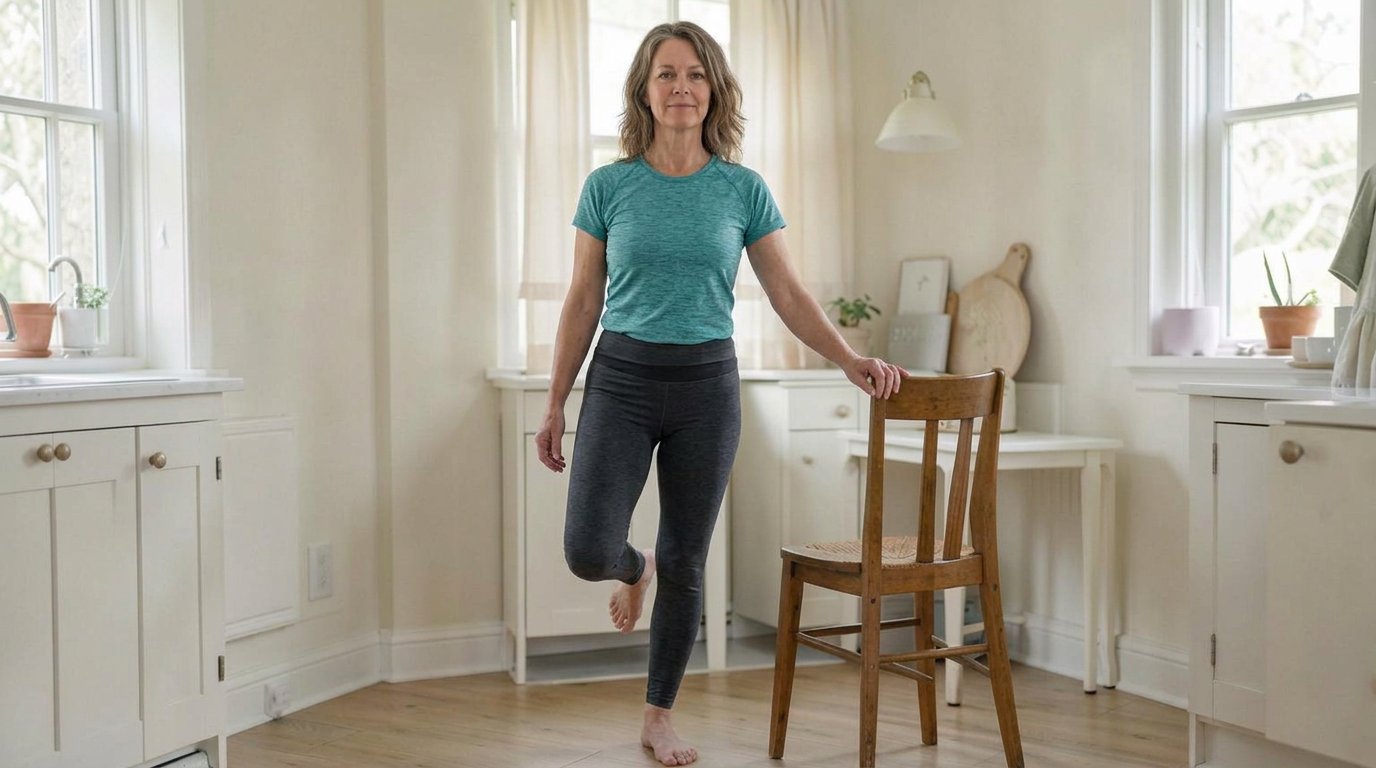
CDC guidance specifically recommends balance activity for adults 65 and older, but there is no reason to wait until 65 to practice steadiness. Supported single-leg work, controlled step-backs, calf raises, and movements that ask you to shift your weight can all help you practice balance safely.
The goal is not to perform circus tricks. It is to stay confident stepping off a curb, walking across uneven ground, turning quickly, and moving through everyday life.
What should I eat if I am adding strength training?
You do not need a special fitness diet.
Start with one simple habit: include a source of protein at each meal.
Protein provides amino acids your body uses to maintain and repair muscle. Instead of turning every meal into a calculation, ask: Where is my protein?
That may be eggs or Greek yogurt at breakfast, chicken or beans at lunch, and fish, beef, turkey, or another protein food at dinner.
Read Protein After 45: A Simple Guide for Women Who Want More Strength and Energy, or use this week's member lesson, Protein After 45: The Simple Habit That Helps Support Strength.
For an easy meal that puts the idea into practice, try the Turkey & White Bean Strength Bowl.
Walking or strength training: which should you prioritize?
Do both if you can.
If you already walk regularly, keep walking and add two short strength sessions.
If you are doing neither right now, start with whichever feels easiest to begin. A ten-minute walk is a perfectly respectable first step. So are five sit-to-stands at the kitchen table.
Then build from there.
You do not have to overhaul your life in one Monday morning.
Why I think about strength differently now
At this point in life, I am less interested in exercise as a way to chase a certain look.
I want strength that lets me keep participating in my life.
I want to carry what needs carrying. Get up from the floor. Walk when I travel. Help when someone needs help. Keep saying yes to the people I love and the opportunities God puts in front of me.
Fitness is not the purpose of life. But taking reasonable care of our bodies can help us keep showing up for the life and purpose God has given us.
That is enough reason for me.
Frequently asked questions
Is walking every day enough exercise for a woman over 50?
Walking every day can provide valuable aerobic activity, but current guidelines also recommend muscle-strengthening activity at least twice each week. Adding strength and, as you get older, balance work creates a more complete routine.
Can walking build leg muscle after 50?
Walking uses your leg muscles and hills can make walking more challenging, but ordinary walking may not provide enough progressive resistance to maximize strength. Dedicated resistance exercises such as sit-to-stands, squats, step-ups, and loaded carries can provide a stronger muscle-building stimulus.
Can I strength train if I have never lifted weights?
Yes. Bodyweight exercises, a wall, a sturdy chair, resistance bands, and light weights can all be used to begin. Start with movements you can control and progress gradually.
How many days a week should women over 45 strength train?
Two days per week is a practical evidence-based starting point and aligns with current U.S. physical activity guidance for adults. More can be appropriate depending on your goals, recovery, experience, and health.
Is 10 or 15 minutes of strength training worth doing?
Yes. Short sessions can help you build consistency and can be progressed over time. What matters is that the exercises actually challenge the muscles and that you continue returning to them week after week.
Should I walk on strength-training days?
You can. An easy walk and a short strength session can fit on the same day if that feels good to you. You can also alternate them. There is no single schedule everyone must follow.
Start with what you can repeat
If walking is already part of your life, you have a good foundation. You do not need to replace it.
Add strength beside it.
Two short sessions a week. A chair. A wall. A couple of light weights if you have them. Movements that help you keep doing ordinary life well.
That is a very good place to begin.
If you want a simple starting point, get the free HolyFit45 3-Day Strong & Well Starter Guide. It gives you three manageable days of strength, walking, protein, and faith without asking you to rearrange your whole life.
Sources reviewed October 2026: CDC Physical Activity Guidelines for adults; a 2026 systematic review and meta-analysis of resistance training in women; 2026 JAMA Network Open studies on strength, fitness, and mortality in older adults; ACSM 2026 fitness trends. This article is educational and not medical advice. If you have health concerns, a recent injury, or questions about what is safe for you, please talk with your own healthcare professional.
HolyFit45 offers general wellness encouragement and is not medical advice. Please speak with your doctor about your personal health.