
Nutrition After 45
How Much Protein Do I Actually Need After 45?
By Connie Grevengoed · September 21, 2026 · 5 min read
Why protein recommendations differ, what the numbers look like in a worked example, and how to read a serving size without making every meal a calculation.
Protein advice can sound like a moving target. One article says 46 grams. Another says 100. Then the yogurt shelf offers three different numbers on three very similar containers.
The useful question is what those numbers mean for you. Turning 45 doesn't give every woman the same protein prescription.
Why you'll see different recommendations
The adult Recommended Dietary Allowance, or RDA, is 0.8 grams per kilogram of body weight per day. The scientific report accompanying the current U.S. guidelines describes this as a reference intended to prevent deficiency, rather than an ideal amount for every goal or situation. Read the scientific report, protein section.
The 2025–2030 Dietary Guidelines for Americans give a protein serving goal of 1.2–1.6 grams per kilogram per day, adjusted for individual calorie needs. That's a different kind of recommendation from the RDA. It isn't a special rule that begins on your 45th birthday. See the current guidelines, page 2.
These figures explain why advice can differ. They don't replace an individual assessment of your health, activity, appetite and overall food intake.
A worked example, not a personal prescription
Suppose a woman weighs 150 pounds. Divide pounds by about 2.2 to estimate kilograms: 150 ÷ 2.2 is about 68.
- At 0.8 grams per kilogram, the calculation is about 55 grams a day.
- At 1.2–1.6 grams per kilogram, it is about 82–109 grams a day.
This comparison shows the arithmetic behind the recommendations. It doesn't establish which amount that woman should eat. If you're unsure where to start, bring these numbers and a description of your usual meals to a registered dietitian. Ask what fits your circumstances rather than choosing the biggest number.
Read the serving size before the protein number
A food's weight in grams isn't the same as its grams of protein. A 170-gram container of yogurt doesn't contain 170 grams of protein.
On the Nutrition Facts label, find the serving size and then the protein line. Check how many servings you'll actually eat. For a hypothetical product with 15 grams of protein per serving, half a serving supplies about 7.5 grams. Two servings supply about 30 grams. The serving size is a labeling reference, not an instruction about how much you must eat. FDA guide to using the Nutrition Facts label.
That little check is often more useful than comparing the large claims on the front of packages.
Turn the information into an ordinary meal
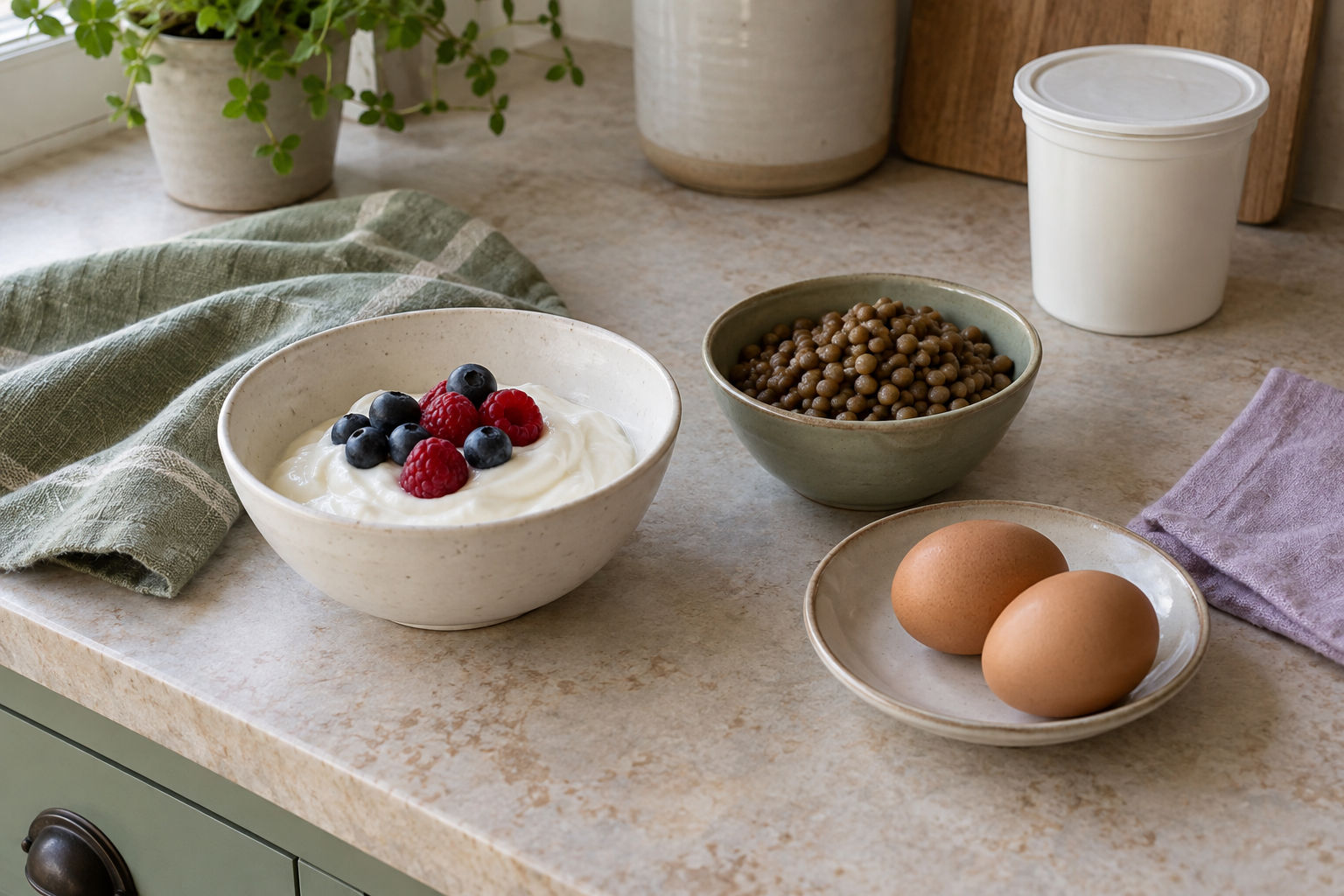
You don't need a new pantry to begin paying attention. Look at a meal you already make and identify its protein foods. Eggs, yogurt, fish, poultry, beans, lentils and tofu offer different options. Choose foods that fit your preferences and budget, alongside the rest of your meal.
For ideas without more arithmetic, use the HolyFit45 simple protein guide. This article adds context for the numbers; that guide offers familiar meal ideas.
Here's a small project for this week: look at the labels on two foods you buy regularly. Write down the serving size and protein grams. You aren't grading your meals. You're learning what is actually in them.
When the general numbers aren't your numbers
If you have chronic kidney disease, don't raise your protein intake from an internet calculation. Kidney care can require a different balance, and people receiving dialysis may have different needs again. Work with your kidney care team or dietitian. NIDDK guidance on food and chronic kidney disease.
Personal guidance also makes sense when illness, poor appetite or an existing treatment plan is affecting how you eat.
Caring for the body God has given you can include asking a practical question and taking time to understand the answer. You don't have to turn every meal into a calculation. Start with information you can use.
General nutrition education, not a personalized eating plan. Sources checked September 20, 2026.
HolyFit45 offers general wellness encouragement and is not medical advice. Please speak with your doctor about your personal health.