Gentle Strength
Why Strength Matters After 45 — And What to Do If You Haven't Exercised in Years
By Connie Grevengoed · October 19, 2026 · 9 min read
If it's been years since you exercised, it isn't too late. Here's why strength matters after 45 and a simple, gentle way to start again at home.
If it's been years since you did any kind of real exercise, you're not alone. Many of us spent our forties and fifties raising kids, working, caring for parents, serving at church, and simply getting through the week. Exercise slid to the bottom of the list. Now you may be wondering whether it's too late, or where you'd even begin.
It isn't too late. You can start right where you are, with a chair, a wall, and a few minutes.
Why does strength matter after 45?
Strength matters after 45 because it's what lets you keep doing everyday things on your own: getting out of a low chair, carrying groceries, climbing stairs, lifting a suitcase into an overhead bin, kneeling in the garden, and getting down on the floor with your grandchildren and back up again.
Our bodies change as we get older. Mine certainly has. I'm not trying to look like I did at thirty. I want to stay strong enough to keep doing the things I love and the things God calls me to do, for as many years as He gives me.
The good news is that strength training doesn't require a gym, heavy weights, or an hour of your day. Your own body weight, a sturdy chair, a wall, and a pair of light dumbbells (or two water bottles) are plenty to begin.
What changes after 45, and why strength becomes more important
Starting in midlife, most of us gradually lose some muscle each year if we don't use it. For women, the hormone changes around perimenopause and menopause can also affect muscle and bone. You may notice it as stairs feeling harder, bags feeling heavier, or feeling a little less steady than you used to.
Research generally shows that regular strength training helps adults keep muscle, supports bone health, and improves balance and everyday function at any age. That doesn't mean it fixes everything, and it isn't a substitute for your doctor's advice. It does mean the effort you put in now can make daily life easier for years to come.
If you have a health condition, a recent injury, joint replacement, or you're unsure what's safe for you, talk with your doctor or a physical therapist before you begin.
What does functional strength really mean?
Functional strength is strength you can use in real life. Instead of building muscle for its own sake, you practice the movements you already do every day so they stay easier.
- Standing up and sitting down — your legs and hips (sit-to-stand)
- Pushing — getting up off the floor, pushing open a heavy door (wall or counter push-up)
- Pulling — opening doors, lifting a bag from the car (supported row)
- Carrying — groceries, laundry baskets, a grandchild (farmer carry)
- Steadiness — walking on uneven ground, turning quickly, stepping off a curb (balance work)
When you train these patterns, you're not just "exercising." You're practicing for your life.
If you haven't exercised in years, start here
Start with just a few simple movements, do them slowly and well, and build gradually. You don't need to do all of these on day one. Pick three, and add more when they feel comfortable.
- Sit-to-stand. Sit near the front of a sturdy chair, feet flat. Lean forward slightly and stand up, then sit back down slowly. Use your hands on your thighs or the chair arms if you need to. Try 5–8.
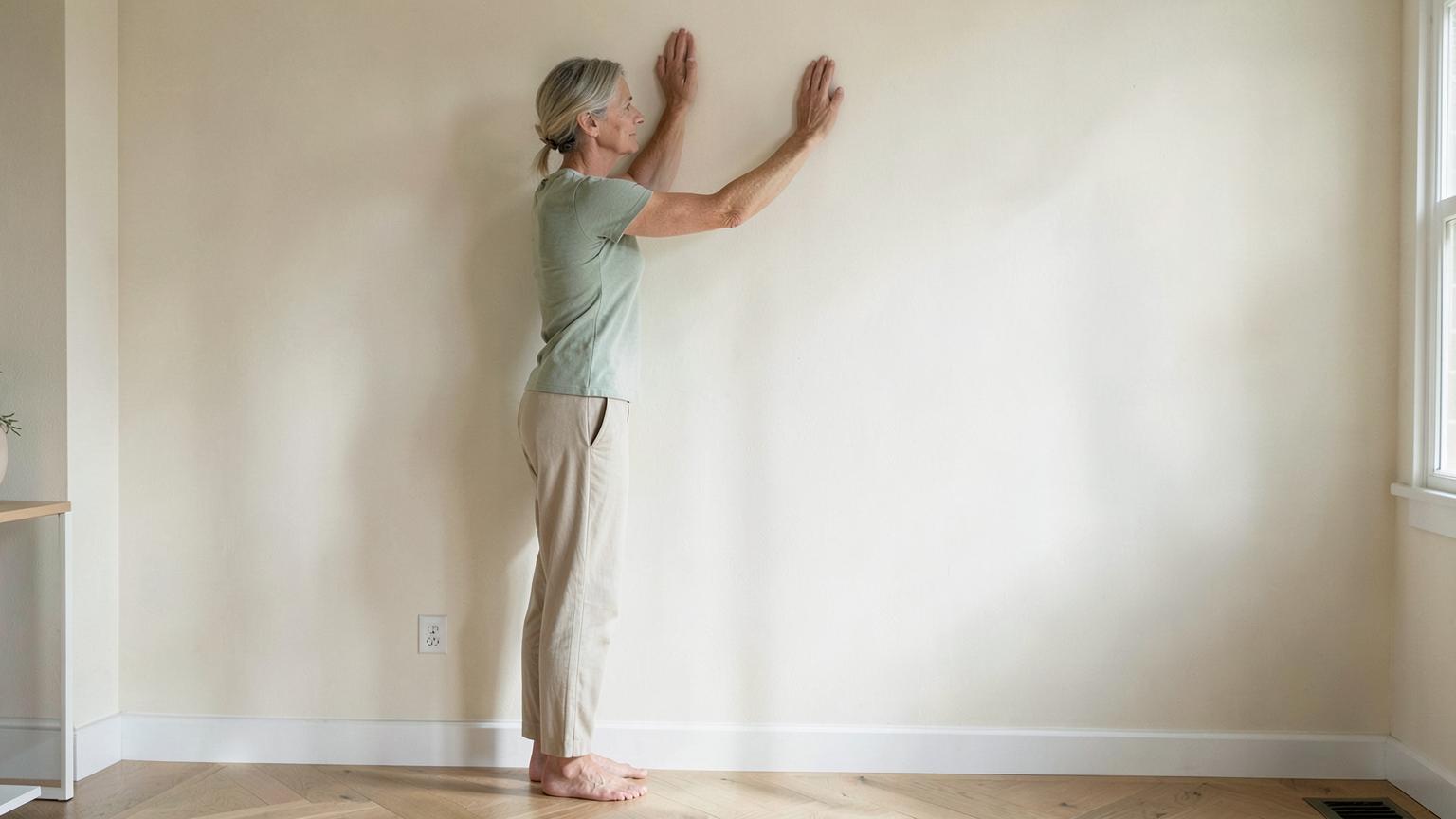
- Wall or counter push-up. Place your hands on a wall or kitchen counter, step your feet back a little, and bend your elbows to bring your chest toward it, then push away. The counter is a bit harder than the wall. Try 6–10.
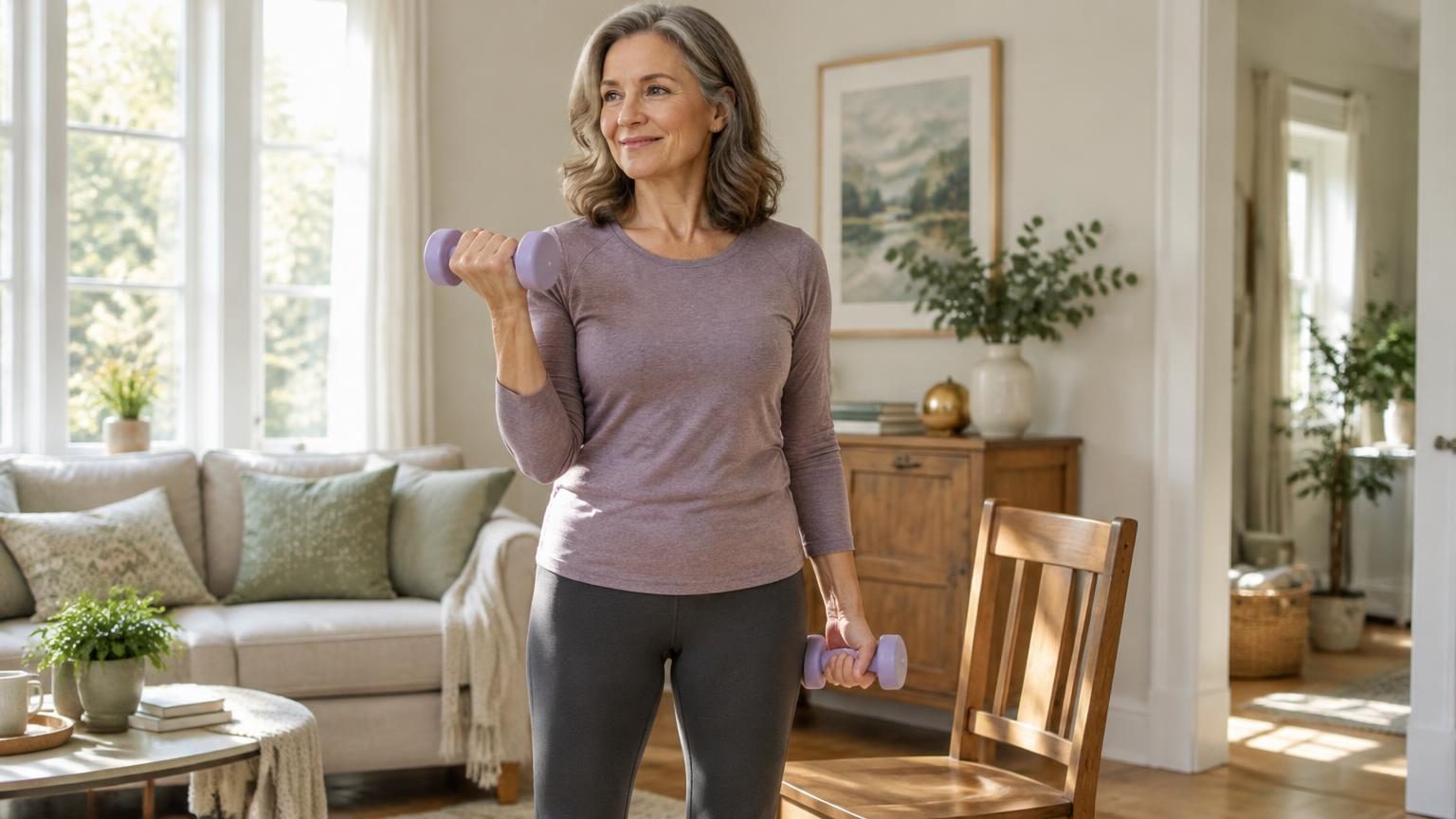
- Supported row. Rest one hand on a counter or chair back, hold a light weight in the other hand, and pull it toward your hip, squeezing your shoulder blade back. Try 8–10 each side.
- Calf raise. Hold the back of a chair, rise up onto the balls of your feet, then lower slowly. Try 10.
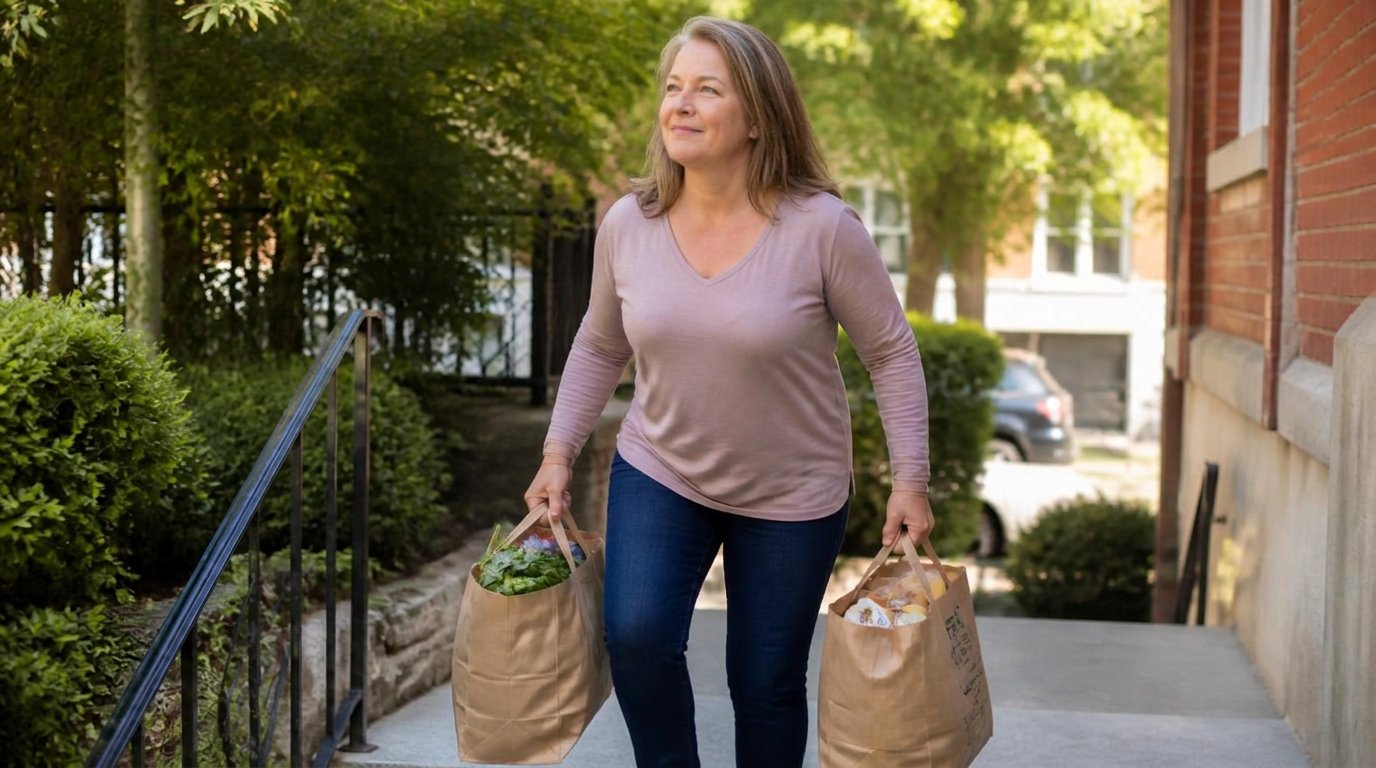
- Farmer carry. Hold a light weight or full grocery bag in each hand, stand tall, and walk slowly across the room and back for 30 seconds.
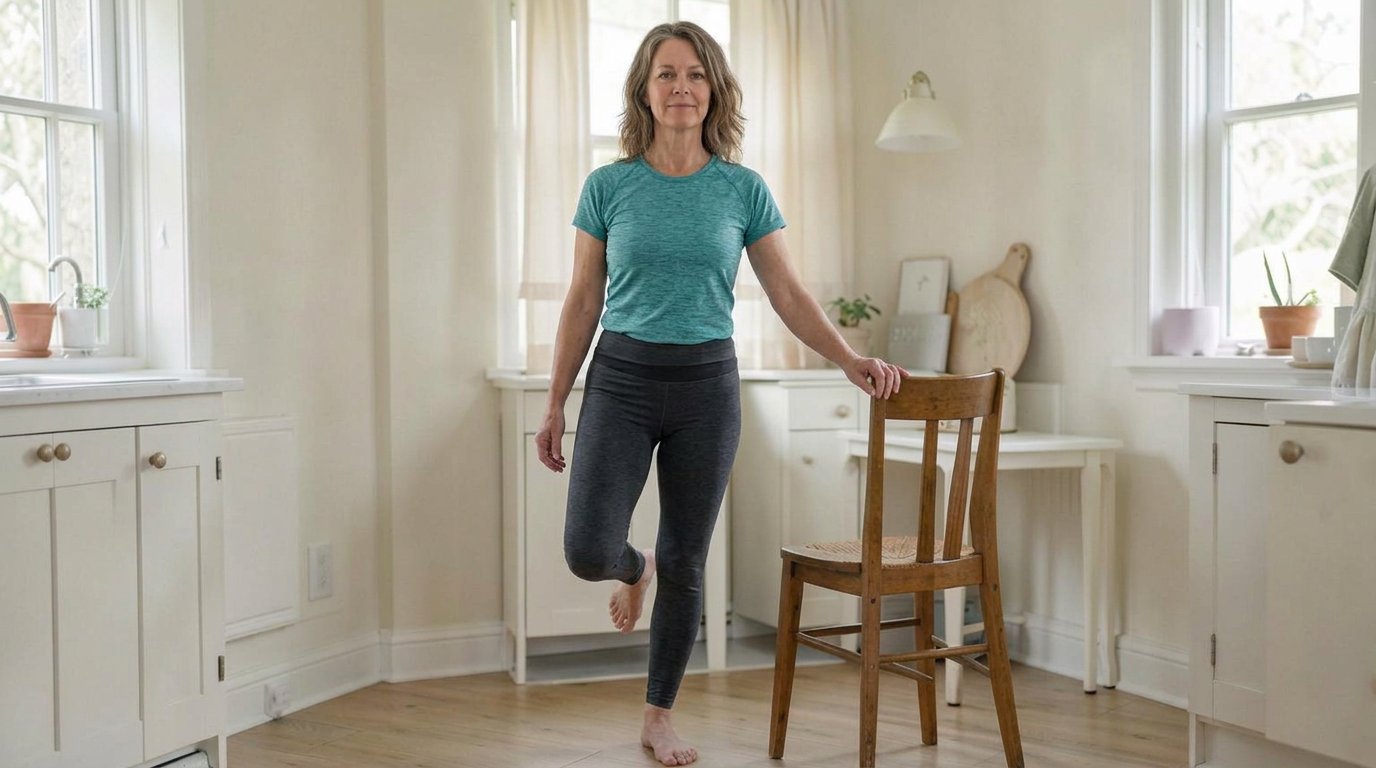
- Supported balance. Hold the counter and stand on one foot for 10–20 seconds, then switch. Keep a light touch on the counter for as long as you need it.
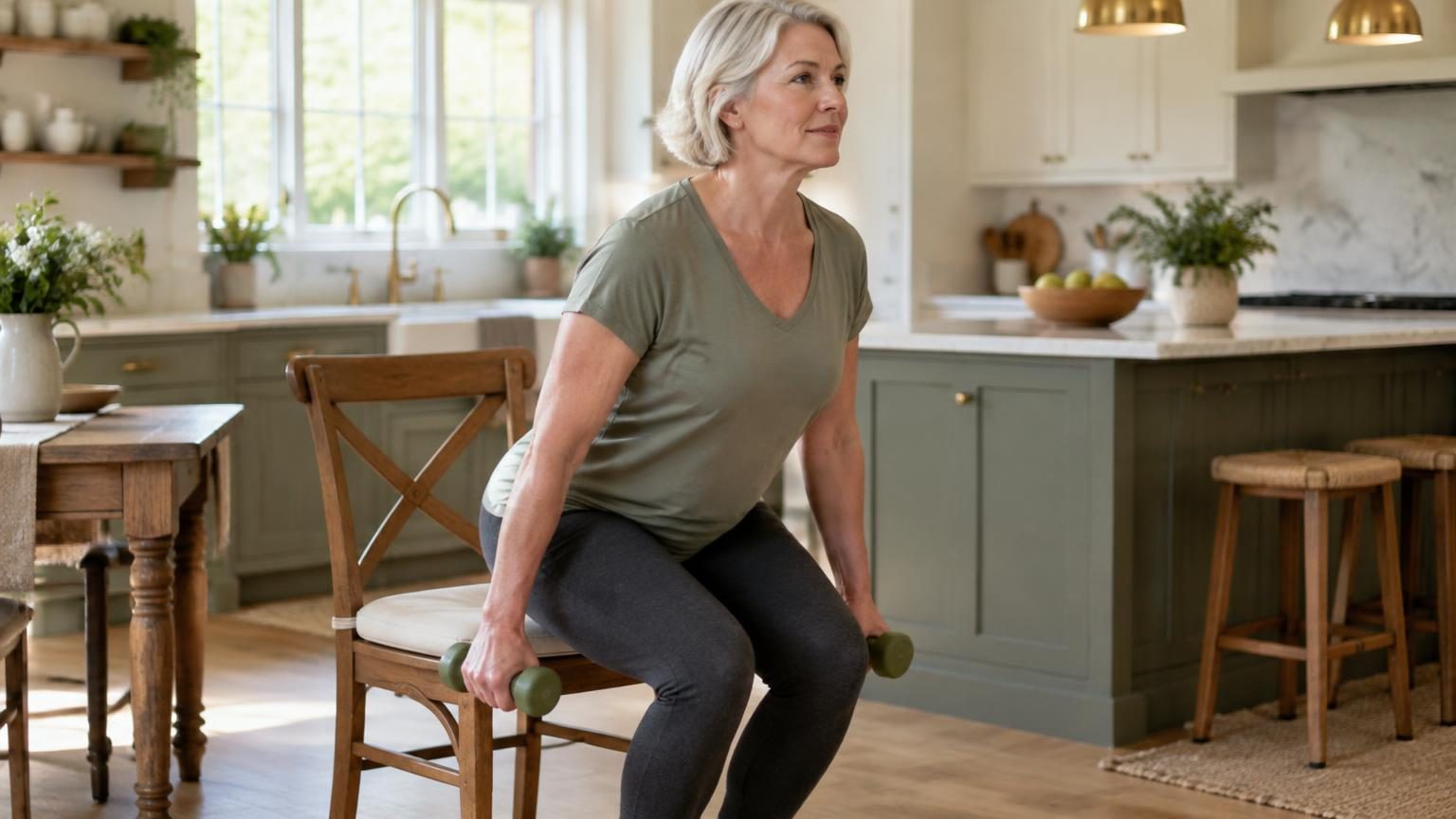
Move slowly, breathe normally, and stop if something hurts sharply. A little muscle effort or mild next-day soreness is normal; pain is not. For more on steadiness, read Balance After 45: Simple Ways to Feel Steadier. If you'd like a ready-made routine, try the free Strong for Life Starter Workout, or read Can Bodyweight Exercises Build Strength After 45?
Missing a day is not starting over
This is the part that trips up so many of us. We miss a day, then a week, and we decide we've "failed" and have to start all over again. You don't.
Missing a day is just a missed day. Strength builds over months of showing up imperfectly, not weeks of doing everything right. When life gets full, do a shorter version: five sit-to-stands while the coffee brews still counts. Then pick back up the next day. Consistency is coming back, again and again.

Don't forget protein
Your muscles need building blocks. A simple habit is to include a source of protein with each meal: eggs or Greek yogurt at breakfast, chicken, fish, beans, or cottage cheese at lunch and dinner. You don't need a rigid plan. Just make protein part of your plate.
For practical ideas, read Protein After 45: A Simple Guide for Women 45+ and How Much Protein Do I Need After 45?
Strength as stewardship
I don't believe being fit makes anyone more faithful. God doesn't love us more when we exercise. But I do believe caring for the body He gave us is one way to steward the life He's entrusted to us. A stronger body helps us keep showing up for our families, our churches, and our neighbors.
"Even to your old age and gray hairs I am he, I am he who will sustain you." — Isaiah 46:4
He sustains us. Our part is to take the small, ordinary steps that keep us able to serve.
Frequently asked questions
Is it too late to start strength training after 50 or 60?
No. Adults of all ages can build strength with regular, gradual training. Start with body weight and light resistance, and check with your doctor if you have health concerns.
How often should a beginner over 45 do strength training?
Two or three short sessions a week is a good start, with a rest day between sessions. Walking or gentle movement on the other days is a great complement.
Do I need a gym or heavy weights to get stronger?
No. A sturdy chair, a wall or counter, and light dumbbells or water bottles are enough to begin. Many effective beginner moves use only your body weight.
What are the best first strength exercises for women over 45?
Sit-to-stands, wall or counter push-ups, supported rows, calf raises, farmer carries, and supported balance work all train movements you use every day.
What if I miss a workout?
Just pick up again with your next session. Missing a day isn't starting over; long-term consistency matters far more than a perfect week.
Take one small step today
You don't have to change everything this week. Choose one thing: five sit-to-stands, a ten-minute walk, or protein at breakfast. Do it today, and let that be enough.
If you'd like a simple place to begin, get the free HolyFit45 3-Day Strong & Well Starter Guide. It walks you through three short days of strength, walking, protein, and faith. And when you're ready for steady weekly guidance and a community of women walking the same road, you're warmly welcome to join HolyFit45.
HolyFit45 offers general wellness encouragement and is not medical advice. Please speak with your doctor about your personal health.